
Riding and shifting
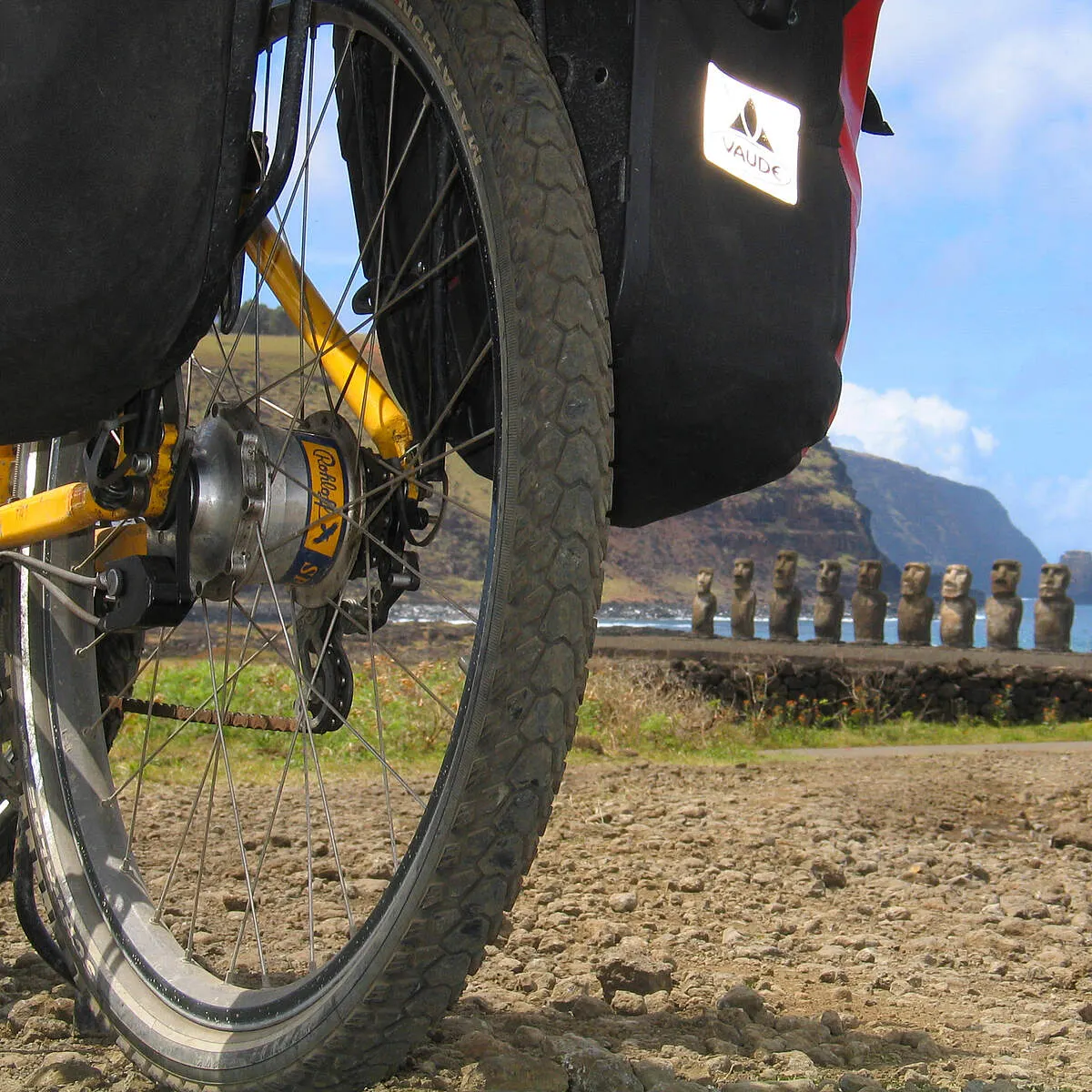
Shifting
Section titled “Shifting”You select all 14 gears of the SPEEDHUB 500/14 with the twist shifter — one at a time or several at once, up and down. The number facing the mark on the shifter housing shows the gear you are in.
- The shifter usually sits on the right of the handlebar; for special cases it can go on the left.
- Turning towards 14 shifts into the harder, faster gears; turning towards 1 into the easier ones.
- There is no delay: the gear changes as you turn the grip, and you feel it click into place in the shifter. You can shift standing still, freewheeling or pedalling.
Shifting moves shift elements inside the gear unit. At a standstill and under light pedal pressure the grip turns easily; the harder you pedal, the more force the shift needs. The secret of a light shift: ease off the pedals a little at the moment you turn the grip — there is no need to stop pedalling. At the cranks’ dead centres the pedal pressure drops by itself, which is why shifting is lightest there.
Running noises
Section titled “Running noises”Pedalling in certain gears, you may hear two kinds of noise, both of them by design:
- Freewheel noise in some gears, most noticeably in gears 5, 6 and 7.
- A hum in gears 1–7 under heavy pedal pressure or at high cadence — the typical sound of a straight-cut precision gearbox.
The frame tubes can amplify these sounds like a resonator: the larger the tube diameter, the louder they can get. When freewheeling, a different freewheel works depending on the gear, so the sound differs too.
Breaking in
Section titled “Breaking in”The SPEEDHUB’s gears and shift elements are made of hardened steel to tight tolerances. Over the first 1,000 km or so, the working surfaces smooth each other at a microscopic level: the gearbox gets quieter and the shifting smoother. There are no restrictions while it breaks in.
Pushing the bike
Section titled “Pushing the bike”When you push the bike, the cranks may turn with it. That is the hub’s shaft seal dragging the sprocket along — it is more noticeable with a very free-running bottom bracket. A drop of Rohloff cleaning oil (Art. no. 8402) applied to the shaft seal through the holes in the sprocket reduces the effect.
Transport
Section titled “Transport”
In a car or a plane the hub can be exposed to large changes in temperature and air pressure. Transported lying down, the oil sits against one of the axle seals and can leak out. So transport the rear wheel upright. If that is not possible, pack it so that any oil that escapes does no damage. Upright, changes in temperature and pressure have no effect on the hub.
Check regularly
Section titled “Check regularly”- The SPEEDHUB’s mounting in the frame: quick release 7 Nm, axle nuts 35 Nm, A12 bolt 15–20 Nm.
- The fit and mounting of the torque support on the frame.
- That the braking surfaces are free of oil and grease.
- That the shell cover screws are tight — especially on disc brake (DB) hubs.
- That the axle plate screws are evenly tightened (3 Nm).
- That the shift cables and their connections (bayonets or cable box) are secure.
- On an E-14, that every plug is fully home and no cable touches the spokes or the brake disc.
- The spoke tension: about 1,000 N with the tyre inflated.
- After a fall or accident, that no part is damaged. Riding on damaged parts is dangerous.
Leave installation work to a workshop — to us, for example: book an appointment. Before a longer tour, do a test ride or two so that hidden installation faults show up at home; to prepare, see Preparing for a long tour.
Frequently asked questions
- Can I shift the SPEEDHUB under load?
- You can, but it is not recommended. Ease off the pedals for a moment as you shift — there is no need to stop pedalling — and the shift is light and precise. Under heavy pedal pressure the shift elements can spring back and the cranks can briefly freewheel.