
Riding in winter
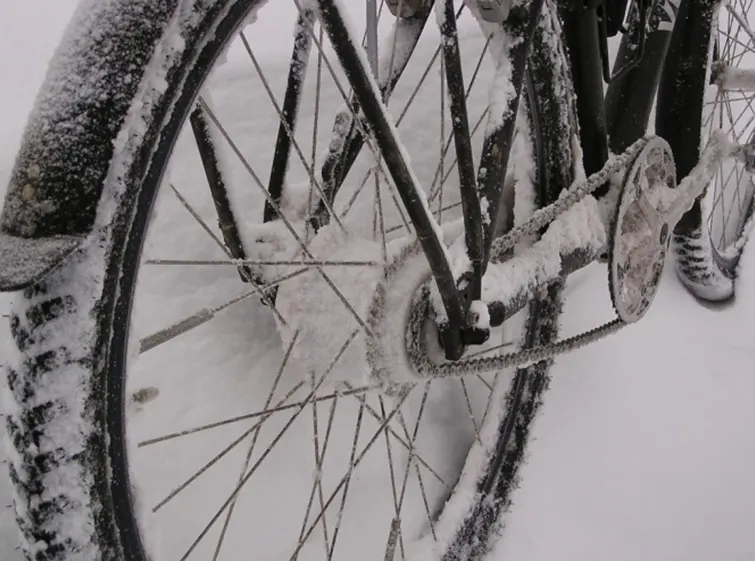
The SPEEDHUB is a reliable companion in winter too, but the cold affects a few things: freezing water can stop the shifting, and thicker oil can cause slipping. Here is what helps.
Stiff shifting or slipping: thick oil
Section titled “Stiff shifting or slipping: thick oil”The SPEEDHUB is filled at the factory with an all-season oil that normally works trouble-free down to about −15 °C (±5 °C). If the oil has not been changed for a long time and condensation has collected in it, slipping right after a shift can start even in a light frost — typically in gears 4, 6, 7, 11, 13 and 14.
The answer is a winter oil mix. Do an oil change with a thorough flush, but instead of the usual 12.5 ml of SPEEDHUB OIL, fill a 1:1 mix of about 6 ml all-season oil and about 6 ml flushing oil. It works best with the whole hub at around 20 °C. The SPEEDHUB then works in very cold weather too.
The thinner mix can stay in over the summer — at most the gearbox will sound a little louder.
Frozen shifting: water in the cables or the grip
Section titled “Frozen shifting: water in the cables or the grip”- The grip is frozen. Take off the grip rubber, clean and re-grease the grip, and replace the sealing ring if needed.
- The cables are frozen. If the cables loop down under the shift shaft, water that gets in collects at the lowest point and freezes. Gently moving and kneading the housing can free the inner wire. Then put the bike somewhere frost-free so the water can drain. For good, replace the cables and the plastic liner.
- The cable box or the internal actuation is frozen. Take off the cable box cover (external actuation) or the axle plate (internal actuation), clean it and give the cable pulley a thin coat of grease.
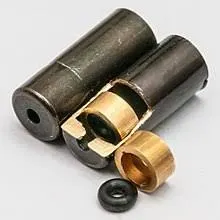
Water gets into the housing at the cable ends, carried in by the wire as you shift, or down a sloping cable run. With the original sealed Rohloff end caps this happens far less often — without them, or with unsealed ones, the problem gets worse.
A Gates belt in winter
Section titled “A Gates belt in winter”A carbon belt has a slightly negative thermal expansion: in the cold, an aluminium frame contracts while the belt gets a little longer. The change is only a few tenths of a millimetre, but on bikes ridden all year it is worth checking the belt tension regularly in winter and adjusting it to the conditions.
Frequently asked questions
- What should I do if the hub shifts stiffly in deep winter cold?
- In extreme cold (below −15 °C) the oil can thicken. The factory specification then allows a little cleaning oil to be mixed into the running oil so the lubrication stays thinner. If you ride in those conditions, ask us about preparing the hub for winter.